After months of guesswork or years of dealing with the unknown and numerous doctor visits and unexplained symptoms, you finally get a diagnosis. The days of hearing that everything is “normal,” while knowing deep down it’s not, are over.
This should bring you relief, yet for many people, it only paves the way for a much larger question: Why is my body reacting this way? For those living with chronic illness, the nervous system can be the very piece of the puzzle that has been missing.
When Your Nervous System Gets Stuck
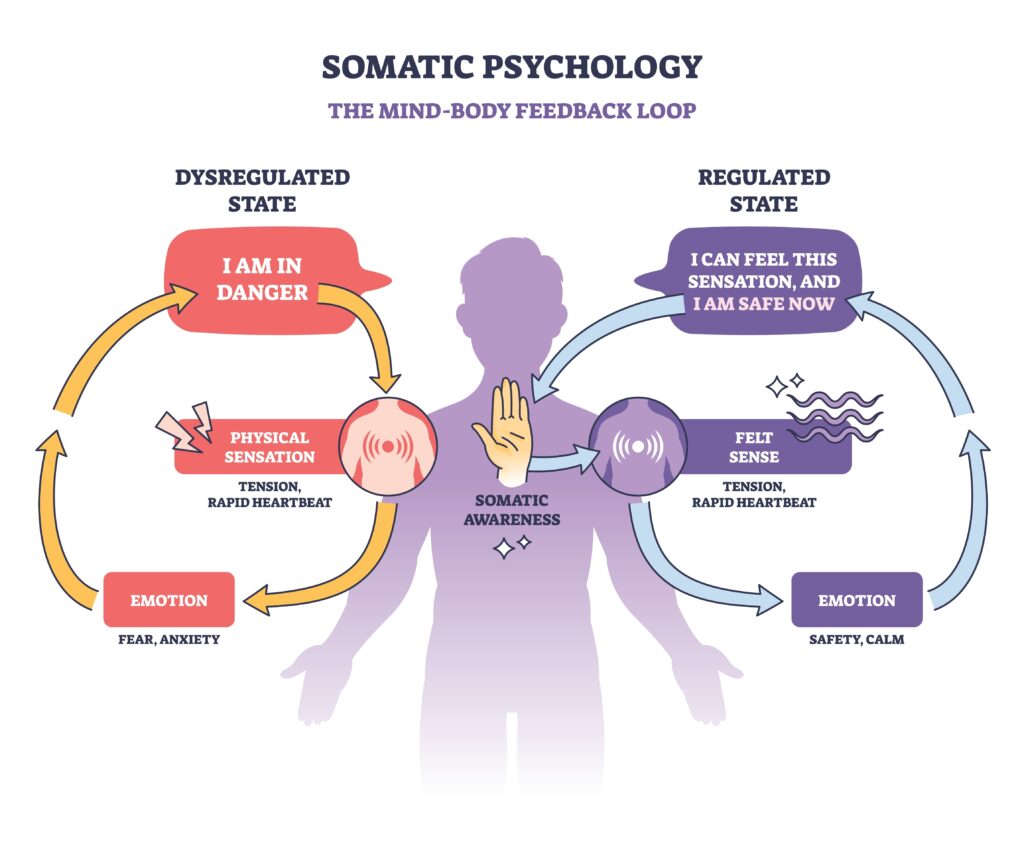
The autonomic nervous system is responsible for your automatic functions, including heart rate, digestion, immune response, and stress responses. When your system is healthy, it shifts effortlessly between activation (such as your sympathetic fight-or-flight response) and rest (such as the parasympathetic rest-and-digest state).
Dysregulation occurs when your system is stuck in an unhelpful pattern. Rather than being able to move fluidly between states as needed, it gets locked into one mode, often hypervigilance or shutdown. When dealing with chronic illness, this can be a huge factor in symptom management.
The Chronic Illness Connection
Chronic illness can come in many forms, including fibromyalgia, irritable bowel syndrome, chronic fatigue, lupus, and autoimmune disorders. Each of these has a strong connection to nervous system dysregulation.
When the body experiences prolonged stress from an illness, the nervous system often enters a state of heightened threat response. The result is a constant feedback loop. An illness activates the body’s stress response, which causes certain symptoms to worsen. Increased inflammation or pain sensitivity, for example, can send signals of danger to your nervous system, causing it to keep sounding the alarm.
This cycle is more than just being stressed. It means your body has learned to protect itself in a somewhat counterproductive way.
Signs of Dysregulation in Chronic Illness
Depending on the person and the condition, nervous system dysregulation may show up in a variety of ways. Common signs include the following:
- Feeling wired, even when exhausted
- Digestive issues that flare up during periods of stress or overwhelm
- Heightened sensitivity to light, sound, temperature, or touch
- Immune system flares that seem tied to emotional or physical stress
- Difficulty recovering from minor exertion or illness
- Anxiety, irritability, or a persistent sense of dread with no clear explanation
These experiences can be confusing, especially when you don’t have a clear reason for them. Understanding how the nervous system interacts with an illness is a good first step for getting appropriate support.
Addressing the Whole System
Standard medical care often focuses on managing individual symptoms, which is important but may not provide the relief needed to manage a chronic illness. Healing needs to include addressing the nervous system and any underlying issues.
Approaches such as somatic therapy or polyvagal-informed care can be effective in these instances. These modalities work directly with the body’s signals, helping the nervous system learn that it’s safe and can shift out of the survival mode it’s stuck in. Pacing, gentle movement, breathwork, and social connection are also valuable components of meaningful management.
The Role of Mental Health Support
Living with a chronic illness can take an enormous emotional toll. You may experience grief, frustration, fear of the unknown, and isolation during this process. These emotional experiences are as important as the physical ones, for they trigger your nervous system and can sustain dysregulation over time.
Working with a therapist who understands and appreciates the mind–body connection can help you work through challenges, develop regulation skills, and rebuild some sense of control.
Many of the therapists at Crossroads Counseling provide somatic psychology, or somatic therapies. Somatic therapies are body-centered forms of psychotherapy that connects the mind and body in the treatment of anxiety, depression, and trauma. Key modalities include Somatic Experiencing (SE), Sensorimotor Psychotherapy, and EMDR which is one of the most effective treatments for post-traumatic stress disorder (PTSD). In addition to therapy that focuses on the mind-body connection, somatic therapies work from the bottom-up which is unlike other therapies that start with thoughts in the brain. Bottom-up processing helps to regulate overloaded nervous systems so that the body can return to its relaxed state.
The Window of Tolerance is an additional helpful tool in understanding the mind-body connection and its role in chronic illness and anxiety. To learn more about the Window of Tolerance please click here.
If chronic illness and anxiety have become tangled together in your life, anxiety counseling at Crossroads Counseling can help you begin separating what’s happening in your body from how you respond to it, giving you some moments of ease in between. Reach out today to get started.
Our compassionate and expert anxiety therapists would be happy to help you. We have offices in Phoenix, Scottsdale, and in all of Arizona through online counseling for anxiety and chronic illness. To start your journey towards healing please follow these simple steps:
- Contact Crossroads Counseling
- Meet with an anxiety therapist
- Learn how to regulate your nervous system
To learn more about our anxiety therapy click here.
Call us for trauma therapy at 623-680-3486,text 623-688-5115, or email info@crossroadsfcc.com.