Trauma-Informed Therapy
Phoenix · Scottsdale · Online

Trauma-Informed Therapy

“Trauma creates change you don’t choose. Healing is about creating change you do choose.”
Michelle Rosenthal

Is a Traumatic Event Negatively Impacting Your Life?

  • Have you experienced a traumatic event(s) that continues to plague you?
  • Do you experience unwanted and intrusive thoughts?
  • Do you avoid people, situations, conversations, or decisions because you do not want to feel uncomfortable?
  • Are you on edge and find that it is difficult to let yourself be calm and to find peace?
  • Are your relationships with the people you love the most suffering?
  • Do you feel hopeless and helpless about the past, present, and future?
  • Are you struggling with feelings of sadness, fear, anger, or emotional numbness?

If any of these experiences sound familiar, working with a trauma informed therapist who understands how to process and heal traumatic experiences can help you find healing and freedom.

Ready to Feel Safe Again?

What Is Trauma-Informed Therapy?

The therapists at Crossroads Counseling are trauma-informed. What this means is that each therapist has received extensive training on how trauma impacts the brain, body, and the nervous system. Our therapists utilize evidence based trauma therapy models such as EMDR, EFT, and IFS to help our clients heal from traumatic experiences and events.

A sense of aloneness is often part of trauma. Peter Levine, trauma researcher, therapist, and author, emphasizes the importance of connection in the healing process. We do not heal in isolation. This is especially true when the trauma is relational in nature. We need others, especially trained therapists, to help us reprocess and integrate traumatic experiences.

During trauma-informed therapy your therapist will help you understand the impact trauma has on your body, emotions, thoughts, perceptions, and relationships. Our therapists prioritize emotional and physical safety, grounding techniques, and the development of healthy coping skills and strategies. The ultimate goal in trauma-informed therapy is to undo aloneness, alleviate suffering, and to integrate trauma so that it becomes part of your story and not something that controls you.

Who Can Benefit From Trauma-Informed Therapy?

Trauma-informed therapy is helpful for individuals struggling with past or current traumatic experiences. The clinical definition of trauma is an emotional, physical, or physiological response to an event or circumstance which was experienced as distressing, frightening, or even life-threatening. Additionally, there is often a component of helplessness and powerlessness in traumatic experiences.

It is important to understand how there are many different types of trauma such as betrayal trauma, developmental trauma, and secondary trauma to name a few. Perhaps two of the more well known types of trauma are acute and chronic. Acute trauma often occurs from a single event such as a car accident. The onset of acute trauma occurs shortly after the event. Chronic trauma is repeated or prolonged exposure to trauma such as domestic violence or childhood abuse.

It is important to understand a person can have trauma without being diagnosed with PTSD. PTSD is a formal psychiatric condition characterized by a set of symptoms. You do not have to be diagnosed with PTSD to have trauma and to benefit from trauma-informed therapy. Our therapists work with clients who have been diagnosed with PTSD and with clients who have trauma but do not meet the criteria for diagnosis or who may not yet have been diagnosed.

Why Trauma-Informed Therapy Is Important

Unfortunately, we live in a world where bad things happen. It is estimated that 70% of people around the world will experience a potentially traumatic event in their lifetime. In the US, it is estimated that 6 out of every 100 people will meet the criteria for PTSD. Veterans, first-responders, and others in similar professions are even more likely to experience traumatic events and/or be diagnosed with PTSD.

Research shows that the relationship you have with your therapist is one of the primary indicators of a successful outcome in therapy. Our therapists are compassionate and trauma-informed therapists. They are trained in evidenced-based models such as EMDR, EFT, and IFS for the treatment of trauma and PTSD. You are not alone. There is hope. There is healing and freedom from trauma.

What Does Trauma-Informed Therapy Involve?

Trauma-informed therapy focuses on addressing the symptoms and behaviors of trauma. Our trauma-informed therapists on building therapeutic rapport and safety in the therapeutic relationship. This is an important component of any therapy, but is perhaps more crucial in trauma counseling. Part of therapeutic rapport is working collaboratively with your trauma therapist. This means that we treat our clients as equal partners. Checking in regularly with our clients to assess how they are doing in therapy and to ensure we are meeting our client’s needs is one of the ways we partner with our clients.

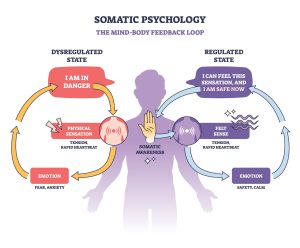
Our trauma-informed therapy focuses on the Window of Tolerance helping clients to learn how to self-regulate and co-regulate overwhelming experiences. You will learn how to slow down and notice what is happening inside of you. Your therapist will help you identify painful thoughts, emotions, memories, and body sensations that are rooted in trauma. Instead of trying to fight or eliminate these experiences, you will learn how to regulate your emotions, reprocess, and ultimately move towards integration which changes how you relate to your trauma, yourself, and others.

Bessel van der Kolk, author of The Body Keeps the Score, demonstrated how unprocessed and unresolved trauma negatively impacts our physical bodies. Our therapists utilize body-based interventions and somatic based therapies in the treatment of trauma which help clients increase awareness of their bodies, reduce traumatic sensations, and move towards approaching life and relationships with hope and choice.

EFT and IFS focus on transforming trauma through healing core traumatic experiences that have shaped a client’s view of self and others. Our therapists will help you heal the parts of self that are seen as unworthy, broken, defective or unloveable through experiential interventions. Experiential therapy goes beyond talk therapy and includes therapeutic techniques such as empty chair, psychodrama interventions, role playing, working with parts, and re-parenting the inner-child.

At Crossroads, your therapist will meet you with compassion, care, and with expertise in trauma-informed approaches such as EMDR, Internal Family Systems, Emotionally Focused Therapy, attachment-based therapy, and other interventions based on your needs and goals.


anxiety qouiz

Anxiety Quiz

Are you constantly worried or on edge? Do you struggle with irrational thoughts and fears? Anxiety is a natural response to danger, uncertainty and challenges, and it is normal to…

Trauma-Informed Therapy Can Help You Move Toward a Meaningful Life

It is possible to heal trauma. Post-Traumatic Growth, PTG for short, is a concept developed by psychologists Richard Tedeschi and Lawrence Calhoun in the 1990s. PTG emphasizes the personal strength we all share as human beings. We are resilient and have an innate drive towards growth, healing, and thriving.

We can grow from trauma by connecting with ourselves and others in deep and meaningful relationships. We can hold grief and gratitude together. They are not mutually exclusive. It is not uncommon for good to come out of painful and traumatic events. In post-traumatic growth we discover new possibilities and often experience profound spiritual and existential meaning.

At Crossroads, we seek to help individuals, families, and couples experience post-traumatic growth. Trauma counseling at Crossroads is not just for individuals. We work with families, couples, and even offer trauma based group therapy. You can participate in weekly counseling or maybe a trauma intensive would be ideal for you.

Benefits of Trauma-Informed Therapy

Trauma-informed therapy at Crossroads can help you heal from trauma and to experience post-traumatic growth. You may begin to experience benefits such as:

  • Symptom reduction such as decreased hypervigilance and negative thoughts.
  • Less avoidance of uncomfortable situations or feelings.
  • Better capacity to manage triggers and overwhelming emotions.
  • Improved relationship with yourself and others.
  • Resolution of guilt and shame.
  • Improved ability to stay present and grounded.
  • Reactivity management.
  • Post-Traumatic Growth.
  • Renewed sense of meaning, purpose, and identity.

Over time, trauma-informed therapy can help you live the life you want and love more openly and freely.

Start Your Healing Journey…

We have offices in Phoenix, Anthem, Scottsdale, and online throughout Arizona. To schedule a session, or for a 15 minutes phone consultation with a licensed therapist, call 623-680-3486, text 623-688-5115, or email using the “contact us” button.

Our Goal
Crossroads Counseling: Arizona Relationship and Trauma Center— where growth, healing, and connection happen.

But, You May Still Have Questions Or Concerns…

There is a subjective component to trauma in that an event could be traumatic for one persona and not for another. The key is to recognize the classic signs and symptoms of trauma and/or PTSD. Some of these are intrusive or unwanted thoughts, images, or flashbacks. Avoidance or situations, places, people, or stimuli that could trigger a trauma response is another telltale sign of trauma. Others may experience hyperarousal, fight or flight, or hypoarousal, freeze, which interferes with their ability to function in everyday life. Another common sign to look for are problems in your relationships, especially with your loved ones. Withdrawing or reacting defensively and/or angrily could be a sign of unresolved trauma.

Talk therapy is helpful but often is limited in its effectiveness. Trauma therapy at Crossroads utilizes experiential models such as EFT, EMDR, and IFS. Some of the benefits of experiential models in the treatment of trauma is that it allows for somatic and emotional release, bypasses verbal blocks, and improves the mind-body connection.

Yes.Trauma-informed counseling can be provided online when clinically appropriate. Crossroads offers online therapy throughout Arizona, and your therapist can help determine whether online trauma therapy is a good fit for your needs.

We understand that beginning therapy can feel like a big step. That is why we offer a complementary 15-minutes phone consultation with one of our therapists. Reach out today to learn if trauma counseling at Crossroads may be right for you.

Recent Blog Posts

Nervous System Dysregulation and Chronic Illness

Read More

When to Seek Therapy for Grief

Read More

The Neuroscience of EMDR: Understanding How It Rewires Your Brain

Read More

How to Manage Anxiety as Your Child Prepares for College

Read More